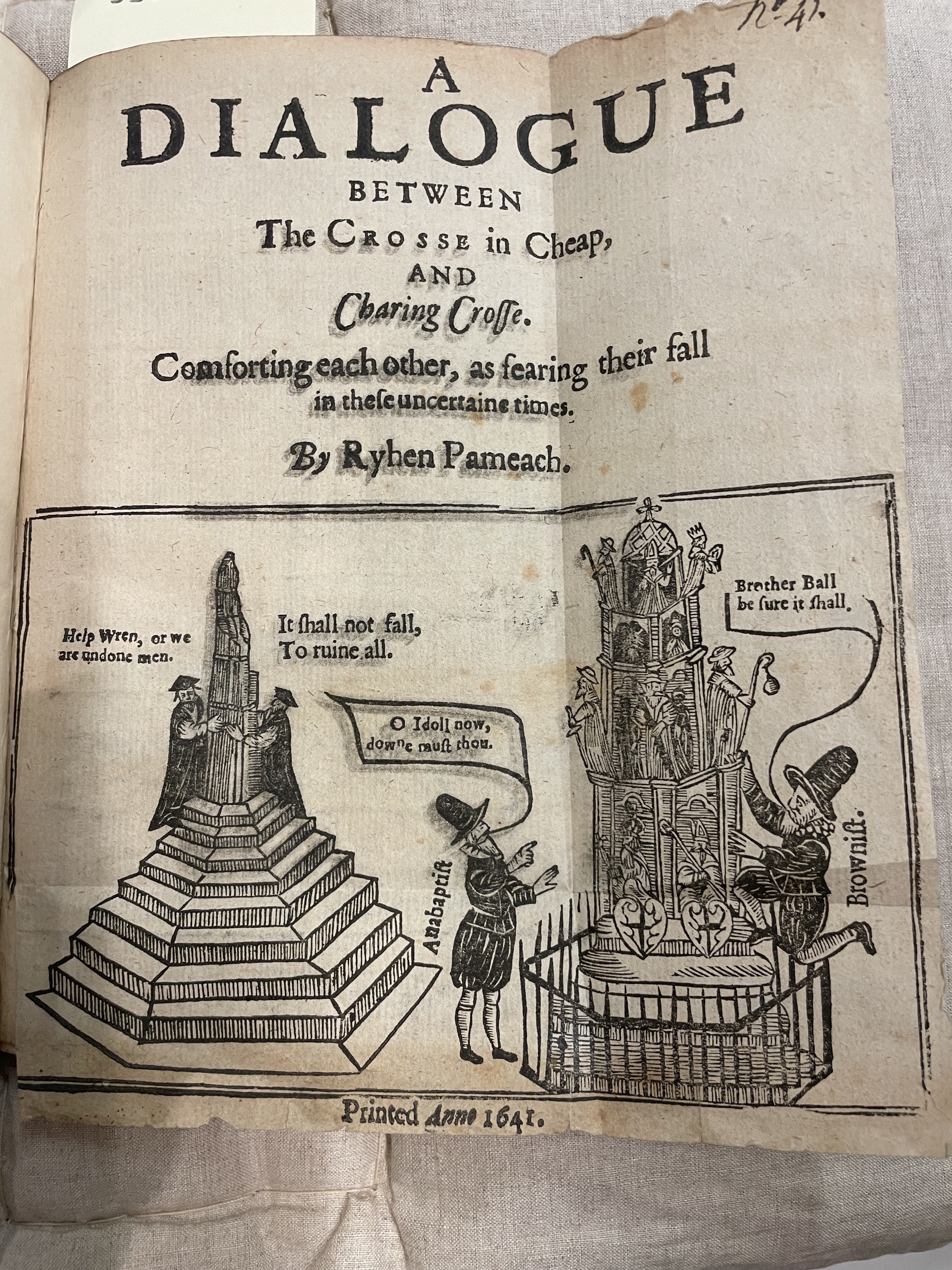
Peacham, Henry, and Samuel Sandars. A Dialogue between the Crosse in Cheap, and Charing Crosse: Comforting Each Other, as Fearing Their Fall in These Uncertaine Times / By Ryhen Pameach. London: printed anno, 1641.
Medieval market crosses, many of which had survived the first wave of English iconoclasm in the 16th century, became the object of increasing controversy in the mid- 17th century as puritans began to increasingly call for the destruction of these catholic monuments. Published in 1641 on the eve of the first Civil War, this is the frontispiece of a pamphlet imagining a dialogue between Charing Cross and Cheapside Cross in London, ‘Comforting each other as fearing their fall in these uncertaine times’. I found this cartoon shockingly modern when I first came across it.
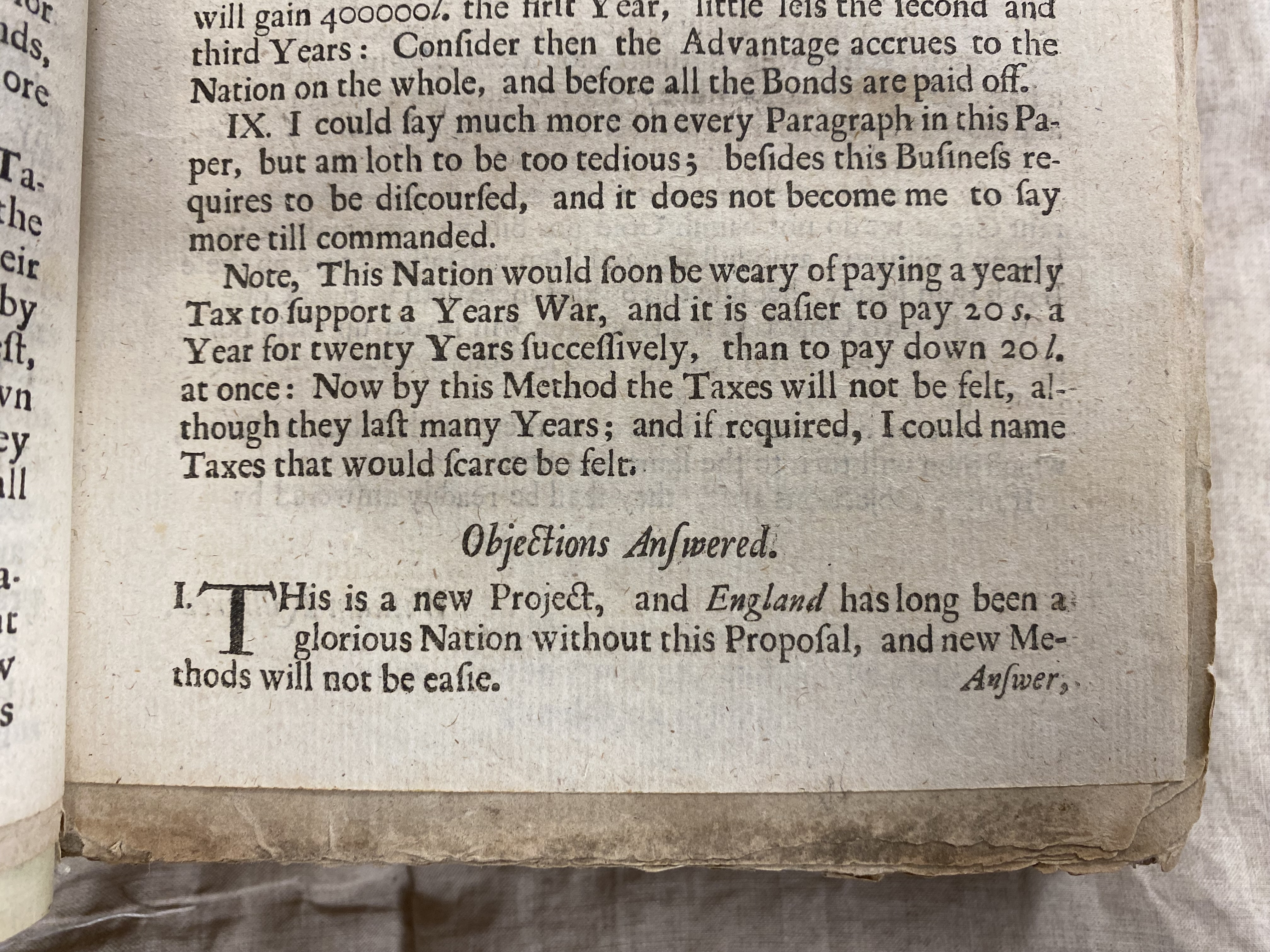
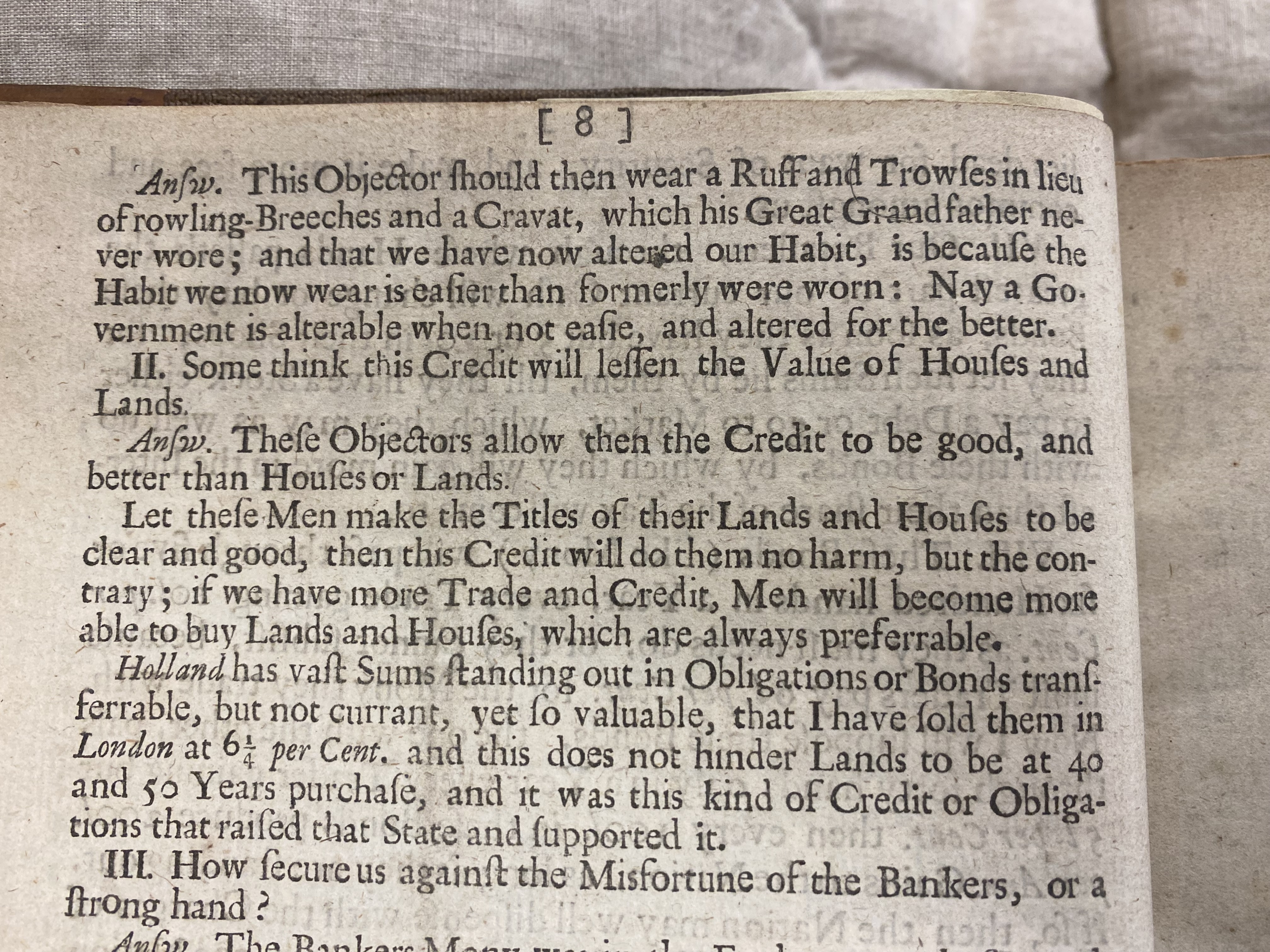
Killigrew, William. An Humble Proposal Showing How This Nation May Be Vast Gainers by All Sums of Mony given to the Crown without Lessening the Prerogative. London, 1663.
These pages come from what could be described as the 'FAQ' section of William Killigrew’s 1663 proposal for the government to issue around £2m in transferable bonds. At the time, this was an entirely novel way for the government to extract liquidity from its subjects, and Killigrew's suggestions were partially implemented. I really enjoyed the cattiness of Killigrew's response to his first 'FAQ', and was amazed by how full-throated his defence of modernity is.
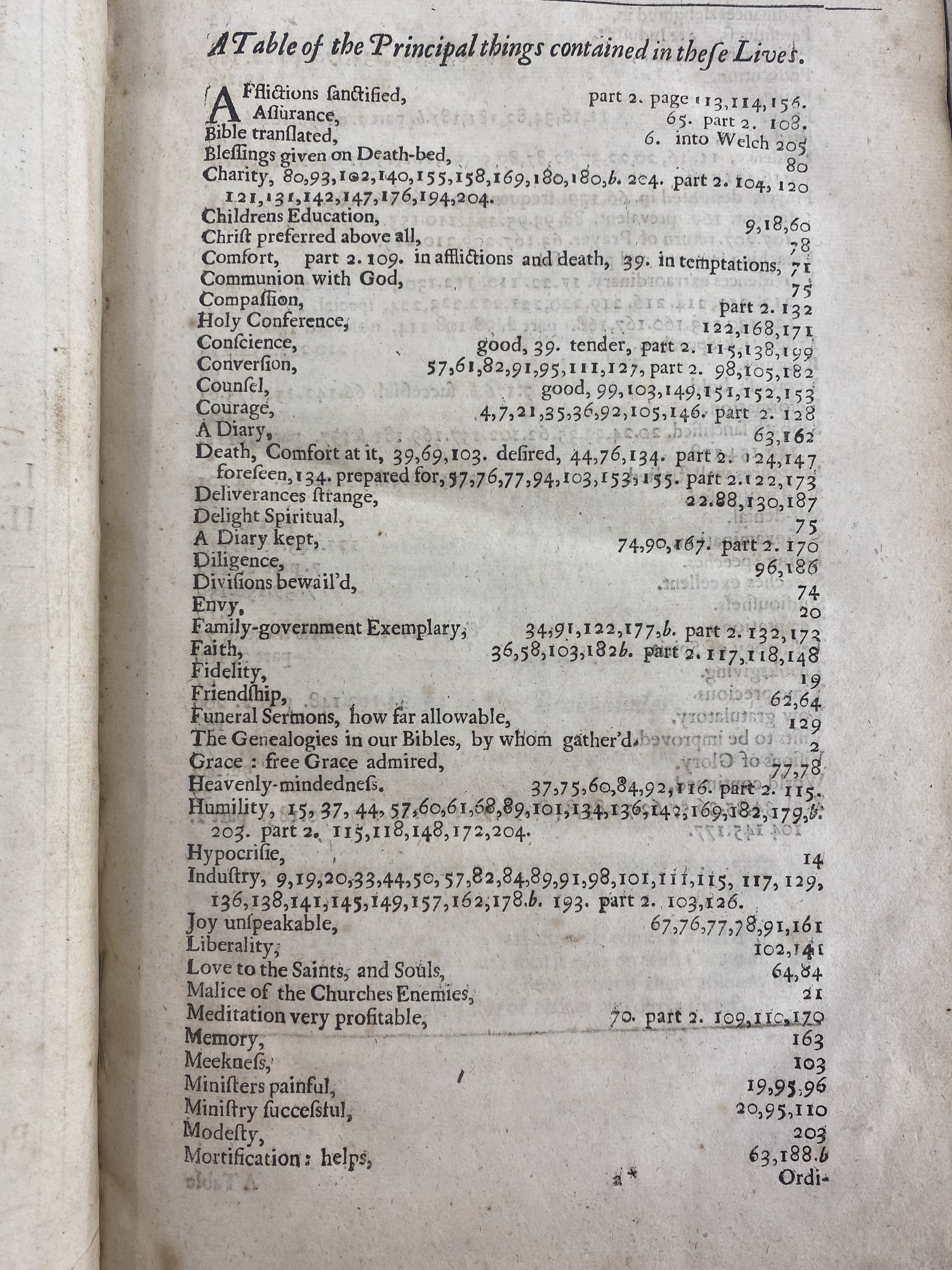
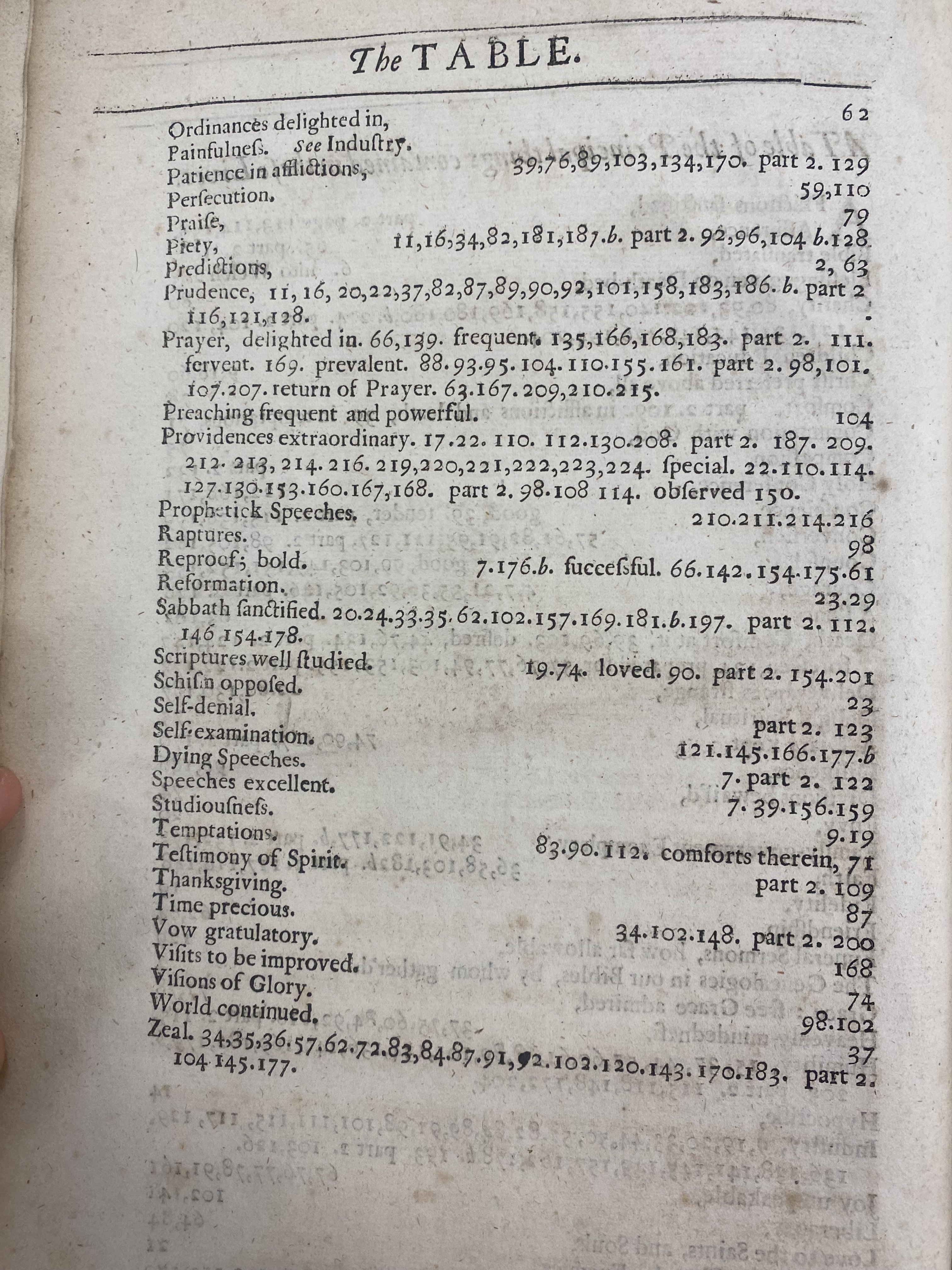
Clarke, Samuel The Lives of Sundry Eminent Persons in This Later Age : In Two Part, I. Of Divines ; II. Of Nobility and Gentry of Both Sexes . London, 1660.
This is the 'table' of Samuel Clarke's puritan martyrology. It allows the reader to locate a puritan life to read that is appropriate to their own spiritual needs. In the puritan tradition, the divines Clarke writes about are being mined for every shard of virtue they have. It's fascinating to see individuals categorised like this, and makes me wonder how I'd be categorised. Meeknefs probably, how lame.